
Finding a crack in your foundation can be unsettling, but not all cracks are created equal. The real question of “when to worry” comes down to what the crack is telling you about the forces at play underneath your home.
Generally, horizontal cracks, diagonal cracks wider than a quarter-inch, and any crack that’s actively growing are serious red flags. On the other hand, skinny vertical cracks are often just a sign of normal concrete curing and are far less concerning.
When Foundation Cracks Signal a Serious Problem
Think of your home’s foundation like a car’s frame. A tiny scratch in the paint is just cosmetic, something you can keep an eye on. But a bent frame? That’s a serious structural problem that affects the entire vehicle’s safety and performance.
Foundation cracks are much the same. Some are superficial, but others are clear signs of significant stress on your home’s core. The trick is learning to spot the difference.
The Three Key Indicators of Crack Severity
You don’t need to be an engineer to get a good read on a crack. You just need to know what to look for. Pay attention to these three key details, and you’ll have a much better idea of what you’re dealing with.
- Direction: How is the crack running? A vertical crack is usually less of a worry. A horizontal crack, however, often means there’s intense pressure pushing against the foundation wall from the outside.
- Width: Is it a hairline fracture, or is it big enough to slide a quarter into? Any crack wider than 1/4 inch needs to be looked at by a professional, period.
- Change Over Time: This is the most important one. Is the crack getting longer or wider? Are the edges no longer even with each other? Movement is a clear signal that you have an active, ongoing structural issue that needs to be addressed.
Here in North Texas, our relationship with the ground is… complicated. The expansive clay soil we have around Dallas-Fort Worth acts like a giant sponge. It swells up massively when it rains and then shrinks and cracks during our hot, dry summers. This constant push-and-pull puts incredible strain on foundations, which is why we have to be extra vigilant here.
A crack is more than just a break in the concrete; it’s a symptom. It tells a story about the forces—like soil pressure, water intrusion, or settlement—acting on your home’s structural core.
This flowchart can help you walk through the process of assessing a crack based on its direction, width, and whether it’s changing.
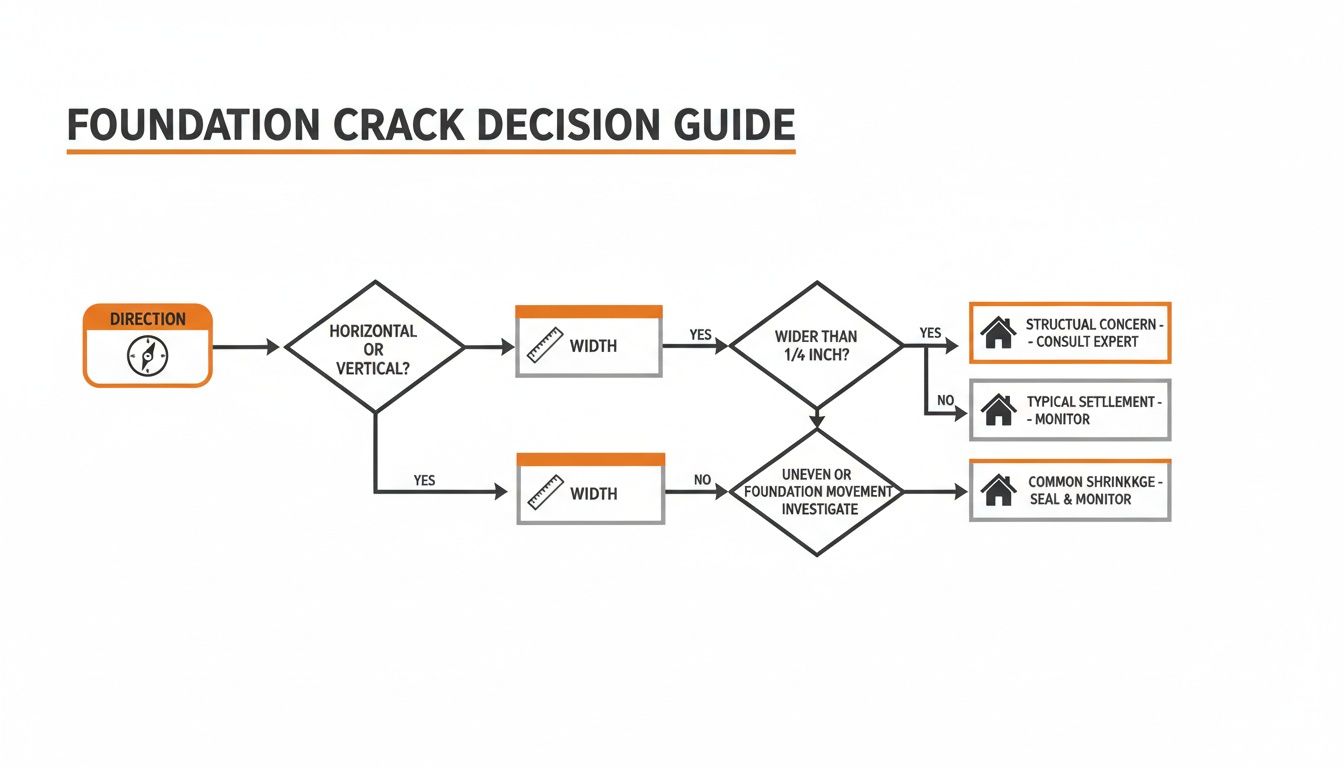
It really simplifies things, guiding you from that first “uh-oh” moment to a clear next step—whether that’s just monitoring or calling in an expert. Knowing when to call a professional for foundation repairs is key to protecting your home’s value and, more importantly, its safety.
For a quick summary, this table breaks down the most common cracks you’ll see.
Quick Guide to Assessing Foundation Crack Severity
| Crack Type | Appearance | Common Cause | Risk Level | Recommended Action |
|---|---|---|---|---|
| Vertical Hairline | Very thin, straight up-and-down lines. | Concrete curing, minor settling. | Low | Monitor for changes. Seal to prevent moisture entry. |
| Diagonal (Stair-Step) | Zig-zag pattern, often in brick or block walls. | Uneven foundation settlement. | Medium to High | Measure and monitor. If wider than 1/8 inch or growing, call an expert. |
| Horizontal | Runs sideways along the foundation wall. | Intense soil or hydrostatic pressure. | High | This is a major structural concern. Call a professional immediately. |
| Wide Cracks | Any crack wider than 1/4 inch. | Significant structural movement. | High | Requires immediate professional assessment and repair. |
Keep this guide handy as a reference, but remember, if you’re ever in doubt, it’s always better to get a professional opinion than to wait and hope for the best.
Every crack in your foundation tells a story. It’s a breadcrumb trail showing the incredible forces your home is up against. If you can learn to read these clues, you’ll know when a crack is just a cosmetic issue versus a sign of real trouble.
Let’s forget the technical jargon for a minute. Think of these cracks like characters in a story. Each one has a personality and hints at what’s really going on with your house—whether it’s a minor tale of concrete setting or a dramatic saga of structural stress.
The Vertical Crack: Common and Usually Harmless
Vertical cracks are the ones you’ll see most often. They run straight up and down, or pretty close to it, on a foundation wall.
Think of these as the natural settling-in process for your home. Concrete shrinks a little as it cures, and sometimes these small, vertical lines pop up. In most cases, they’re not a sign of a serious structural problem.
The main worry with a vertical crack is water. Even a hairline crack can be an open door for moisture to sneak into your basement or crawl space. Sealing them is a good idea for waterproofing, but they rarely mean your foundation is failing.
The Diagonal or Stair-Step Crack: A Sign of Uneven Movement
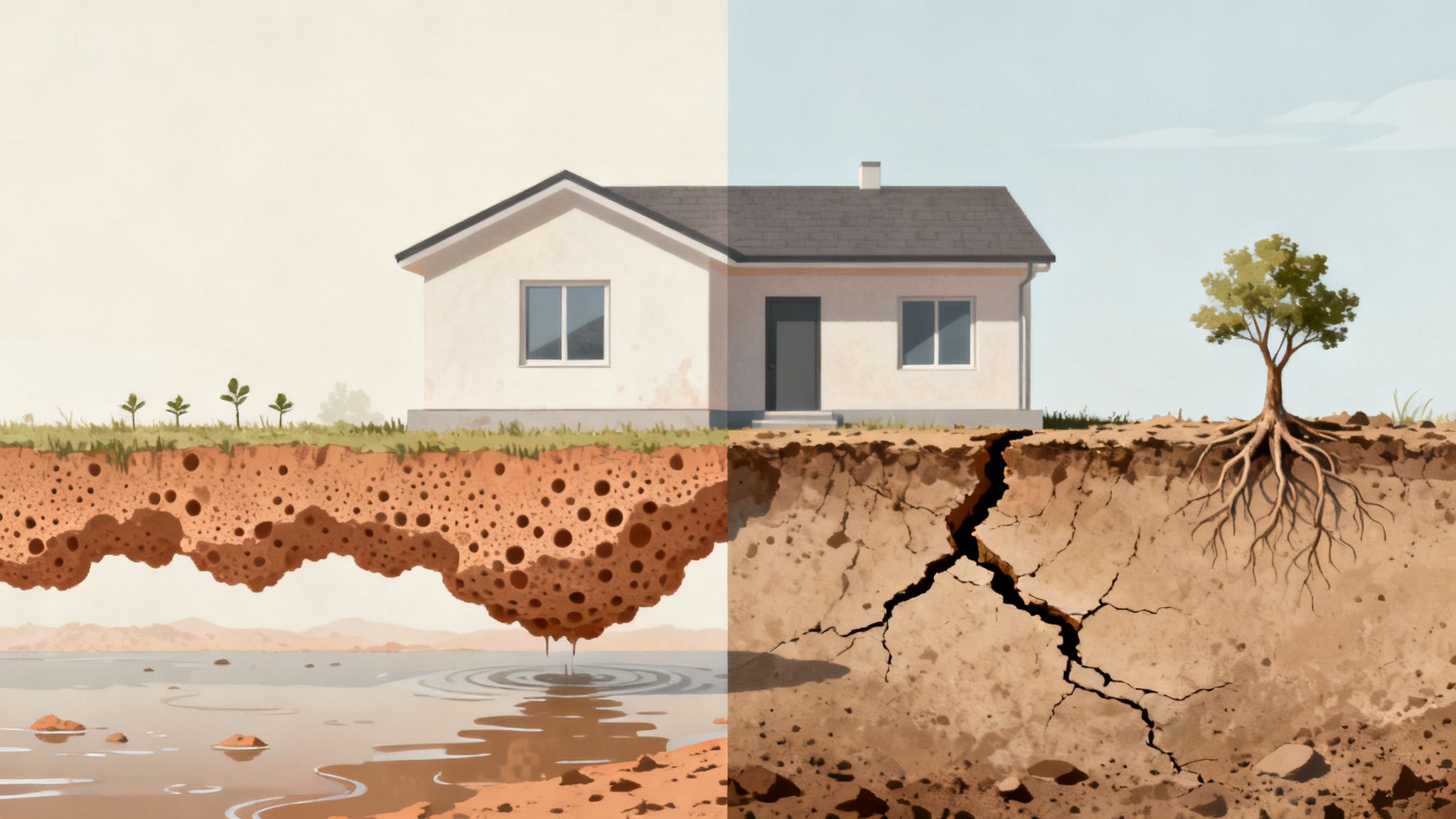
Diagonal cracks are a bit more complicated. They slice across the wall at an angle, usually somewhere between 30 and 75 degrees. In brick or block foundations, they often follow the mortar lines, creating a classic “stair-step” pattern.
This is a dead giveaway for differential settlement. Picture one corner of your house sinking just a tiny bit faster than the rest. That uneven movement pulls the foundation apart, creating tension that results in a diagonal shear crack.
A single, skinny diagonal crack isn’t necessarily a five-alarm fire, but it’s a clear warning that your foundation is on the move. If you spot one, it’s time to start keeping a close eye on it and measure it to see if it’s growing.
The Horizontal Crack: The One to Take Seriously
And now for the main villain of our story: the horizontal crack. This is the one that runs sideways across your foundation wall, parallel to the floor.
A horizontal crack is almost always a major red flag. Imagine a piece of paper buckling as you push on it from both sides—that’s what’s happening to your foundation wall. It means there’s immense pressure from the outside pushing in, and the wall is starting to bow.
Where does this pressure come from? Usually one of two culprits:
- Hydrostatic Pressure: When the soil around your foundation gets saturated with water, it becomes incredibly heavy and pushes against the wall. This is a common problem in homes with poor drainage.
- Soil Pressure: Here in North Texas, we have a lot of expansive clay soil. When that clay gets wet, it swells with tremendous force—enough to literally bend and break a concrete wall.
A horizontal crack is your foundation screaming for help. It means the wall’s structural integrity is compromised and it’s at risk of failing. You need to call a professional, and fast.
The width and direction of a crack are what really matter. Any crack wider than 5 millimeters (about 0.2 inches) is concerning, especially if it’s diagonal or horizontal. You can learn more about what different crack patterns mean from foundation repair experts. These bigger, more dramatic cracks aren’t just ugly—they’re clear signs of major structural movement that needs a professional diagnosis.
The Real Reason North Texas Foundations Struggle
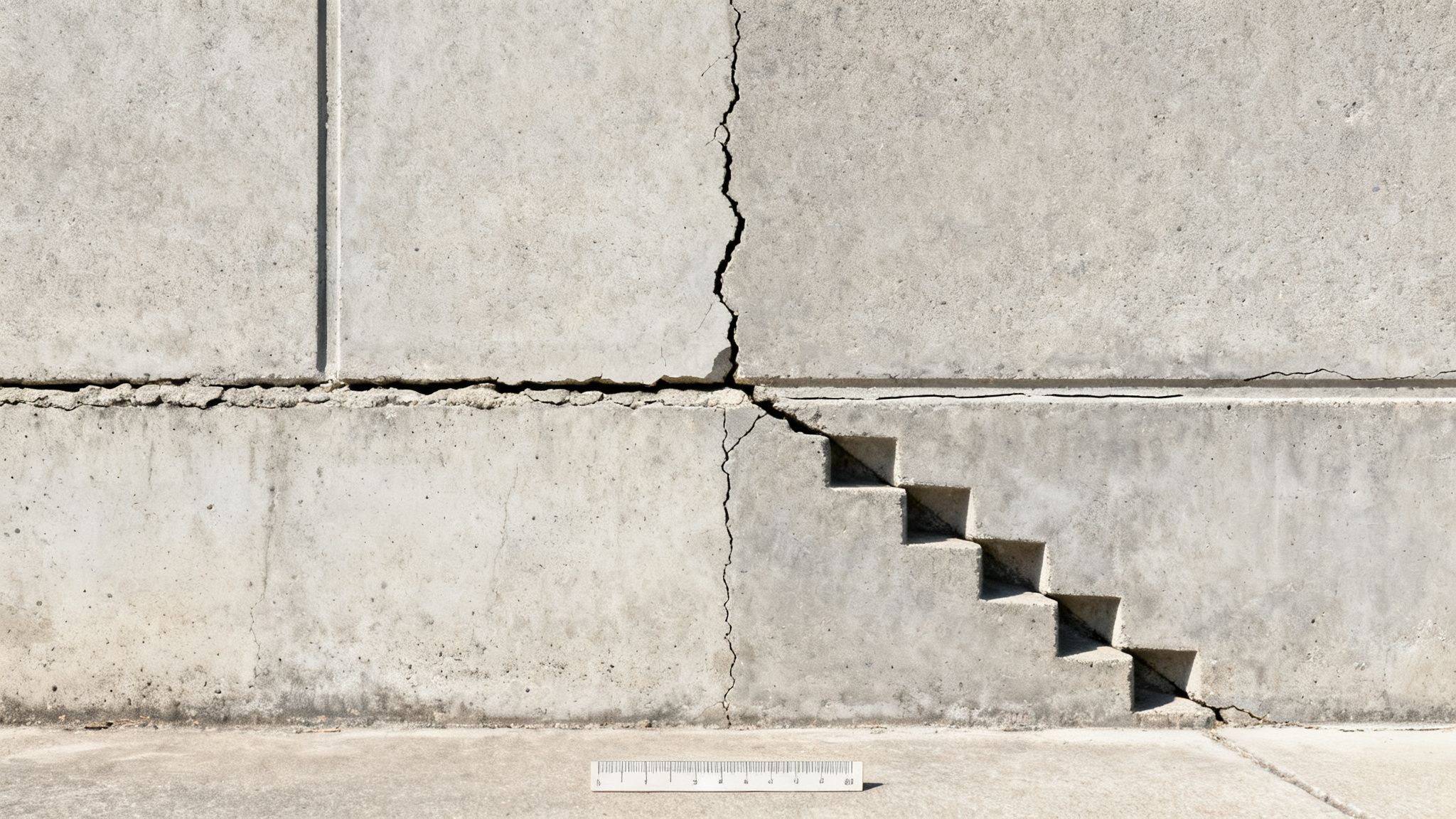
If you’ve ever wondered why foundation repair trucks are a constant fixture around Dallas-Fort Worth, the answer isn’t shoddy construction. It’s the ground right under our feet. The unique geology of North Texas creates a perfect storm for foundation problems, making a little bit of homeowner awareness go a long way.
The main culprit is our region’s infamous expansive clay soil. This stuff is incredibly reactive to moisture, creating a relentless cycle of movement that puts immense stress on the rigid concrete slabs our homes are built on.
The Great North Texas Soil Sponge
The best way to picture what’s happening is to think of the soil beneath your house as a giant, unpredictable sponge. It’s nothing like the stable dirt or sand you’d find in other parts of the country.
When we get a good rain, this clay sponge soaks up an incredible amount of water and expands. This swelling pushes upward on your foundation with tremendous force, a process known as heaving. Your home is literally being lifted from below.
Then, our long, hot Texas summers arrive. The clay dries out, shrinks, and pulls away from the foundation. This retreat creates voids and leaves sections of your home completely unsupported, causing it to sink or settle. This constant cycle of swelling and shrinking is what ultimately causes foundation cracks and serious structural damage.
This up-and-down movement isn’t a one-time event; it’s a seasonal battle your foundation fights year after year. The cumulative stress from this movement is the primary reason North Texas homes are so susceptible to foundation failure.
And this isn’t just a minor issue. Across the country, foundation settling is a real headache, with studies showing that roughly 6.4% of American homes deal with noticeable settling over a 30-year period. That number is especially relevant for us in DFW, where our expansive clay soils put that process on fast-forward. You can learn more about the market trends for foundation settlement repair solutions to see just how common this is.
Other Local Factors Adding to the Strain
While the soil is the main character in this story, a few other local factors can make a bad situation even worse. Knowing what they are is key to protecting your home.
- Large, Thirsty Trees: Those beautiful mature oak and elm trees we love have massive root systems that drink up huge amounts of water. A big tree planted too close to your house can suck the soil dry on one side, causing that part of your foundation to sink rapidly. This is a classic cause of severe, diagonal wall cracks.
- Poor Drainage: In North Texas, how you manage water around your home is everything. If your gutters are clogged or downspouts dump water right next to the foundation, you’re basically force-feeding one part of the clay “sponge” while another area stays bone-dry. This imbalance creates differential movement—the most destructive kind of stress a foundation can endure.
At the end of the day, knowing when to worry about foundation cracks in this region starts with understanding these powerful, localized forces. Proactive moisture management and being mindful of these environmental pressures are your best defenses against expensive repairs down the road.
Warning Signs Beyond the Cracks Themselves
Foundation problems don’t happen in a vacuum. They send out ripple effects that show up all over your house. While a crack in the concrete is the most obvious sign, there are plenty of other clues that can tip you off to a bigger issue. It’s a lot like a fever—the high temperature isn’t the sickness itself, but it’s a clear signal that something is wrong under the surface.
These secondary signs pop up because as your foundation moves, it literally twists and pulls the frame of your house out of alignment. Everything that was once square and level—door frames, window sills, even the roofline—gets distorted. Learning to spot these clues is the key to catching a problem before it spirals into a major, expensive repair.
Doors and Windows That Fight Back
One of the very first places you’ll notice trouble is with your doors and windows. They’re built to fit into perfectly square openings, so even a tiny shift in the foundation can make them act up.
All of a sudden, your front door might start sticking at the top, forcing you to give it a good shove. Or maybe a bedroom door that always closed perfectly now scrapes against the frame. Sometimes, interior doors will even swing open by themselves or refuse to latch, almost as if the house has developed a slight tilt.
The same goes for windows. If a window that used to slide open smoothly now feels stuck or requires a real effort to move, that’s a classic red flag for foundation settlement. It’s not just a minor inconvenience; it means the frame has been warped out of shape.
Gaps and Cracks on the Inside
Next, take a look at where your walls meet other surfaces. When a foundation shifts, the stress travels right up through the wooden frame of your home, and it almost always leaves its mark on your interior finishes.
Keep an eye out for these tell-tale signs:
- Drywall Cracks: Be on the lookout for new cracks spidering out from the corners of doorways and windows. These are textbook stress fractures.
- Gaps and Separations: You might notice a gap opening up between your walls and the ceiling or floor. Baseboards and crown molding can start pulling away from the wall, leaving an obvious space behind.
- Nail Pops: As the drywall moves, it can actually push the heads of nails and screws out, creating little bumps or circles on your painted walls.
These aren’t just cosmetic issues. Think of them as the visible strain gauges of your home, showing you exactly where the hidden stress from an unstable foundation is building up.
Uneven and Sloping Floors
A moving foundation can also make your floors feel… well, weird. They might become sloped, uneven, or even bouncy. A simple test? Place a marble on the floor and see if it rolls to one side of the room on its own. In older pier-and-beam homes, you might feel soft or spongy spots underfoot.
If you have a concrete slab, you might notice new cracks showing up in your floor tiles or grout lines. Hardwood floors can start to buckle or separate. An uneven floor is a direct result of the slab beneath it sinking or heaving, giving you a pretty clear map of where the movement is happening. When you see these signs on top of visible foundation cracks, your home is telling you it’s time to call a pro.
Sorting Out Foundation Repair Solutions and Costs

Once you’ve spotted a potential foundation problem, your mind almost immediately jumps to one question: “What’s this going to cost?” It’s a fair question, and getting a handle on the financial side of things is the first step toward moving past the worry and making a solid, informed decision. The price tag is always tied to the solution, so let’s look at what your options are.
One thing I’ve learned over the years is that waiting is almost always the most expensive option. A problem that might be a straightforward fix today can spiral into major structural damage, sending the repair bill soaring. Think of it as an investment—addressing it early protects your home’s safety and value for the long haul.
Nationally, the average for a foundation repair hovers around $5,100, but that number can be misleading. It’s just a ballpark. Costs have been climbing, and the final price really comes down to the specific repair method your home needs. For example, sealing a few minor cracks might only be a few hundred dollars, but stabilizing a sinking foundation with piers will be in the thousands.
Common Foundation Repair Solutions Here in North Texas
Around Dallas-Fort Worth, our expansive clay soil is the usual suspect. Because of that, local experts rely on a few trusted methods to correct foundation movement, whether it’s settling, heaving, or something else entirely. The right fix always depends on the root cause.
Here are the most common solutions you’ll likely hear about:
-
Polyurethane Foam Injection: This is a great, modern solution for lifting sunken concrete slabs or filling voids that have opened up underneath. A high-density foam is injected below the foundation, where it expands to compact the soil and lift the slab back to level. It’s quick, clean, and not very disruptive.
-
Concrete Piers: This is the classic, workhorse solution for stabilizing a settled foundation. We press short, strong concrete cylinders into the ground under the home’s foundation until they hit a solid layer that can support the weight. It’s a reliable and cost-effective method for the soil conditions we see a lot of here.
-
Steel Piers: When you need maximum stability, steel piers are the answer. They’re driven deep into the earth, bypassing all the shifting clay soil near the surface until they hit bedrock or a truly stable soil stratum. This provides a permanent anchor for your foundation, making them ideal for heavier homes or more serious settlement problems.
Figuring out which method is right is not a DIY job. A professional has to diagnose the problem correctly. Otherwise, you risk wasting money on a fix that doesn’t last or, worse, doesn’t even address the real issue.
Comparing Foundation Repair Methods and Costs in North Texas
Choosing the right path means weighing the pros, cons, and costs of each approach. The table below gives a straightforward breakdown of the most common foundation repair solutions, what they’re best for, and a realistic cost range to help you plan.
| Repair Method | Best For | Estimated Cost Range | Pros | Cons |
|---|---|---|---|---|
| Polyurethane Injection | Lifting settled slabs, filling voids under the foundation | $1,500 – $6,000+ | Minimally invasive, fast curing time, lightweight | Not suitable for all soil types or deep settlement issues |
| Pressed Concrete Piers | General foundation settlement in shallow to moderate soil | $4,000 – $12,000+ | Cost-effective, quick installation | Less depth than steel, can be affected by shifting topsoil |
| Driven Steel Piers | Severe settlement, heavy structures, deep unstable soils | $8,000 – $20,000+ | Reaches deep stable soil, highly durable, permanent fix | Higher initial cost, more disruptive installation |
Ultimately, having this information demystifies the process. When you understand the solutions and their costs, a stressful situation becomes a manageable project. You can explore the specific foundation repair services we offer to get an even clearer picture of what your home might need to be secure for years to come.
What to Expect from a Professional Foundation Inspection
Calling in a professional for your foundation can feel a bit nerve-wracking. But knowing what a real inspection looks like can take a lot of that worry away. A true expert isn’t just going to do a quick walk-around; they’re going to act more like a structural detective, gathering clues to get to the bottom of the problem.
Think of it this way: they’re diagnosing the cause, not just putting a bandage on the symptom. This methodical, data-driven approach is what separates a wild guess from an accurate repair plan. The goal is to get a complete picture of your home’s health, from the ground up.
The Inspection Process Step by Step
A seasoned foundation specialist follows a very specific process. It’s a blend of visual observation and precise, scientific measurements that tells the full story of how your home is settling. It’s definitely not a five-minute glance. You can see how we approach this critical step by exploring our professional foundation inspection services.
Here’s a breakdown of what a proper inspection should always include:
- A Thorough Visual Check (Inside and Out): The inspector will comb through your home’s interior, looking for things like drywall cracks, doors that stick, and floors that slope. Then, they’ll move outside to examine the foundation itself for cracks, bowing, or any other red flags.
- Taking Elevation Readings: This is the most important part of the whole process. Using a high-precision tool like a ZipLevel, the specialist takes measurements across the entire slab. This creates a sort of contour map of your foundation, revealing exactly where it’s sinking or heaving—and by how much. For example, the readings might show one corner is 1.5 inches lower than the rest, immediately identifying the trouble spot.
- Checking Out the Property: A good inspection doesn’t stop at the walls of the house. The expert will also look at the big picture: how water drains around your home, the type of soil you have, and whether large tree roots are too close for comfort. Often, the problem starts with poor drainage or bad grading right outside.
A professional inspection is all about objective data. The combination of elevation readings, crack analysis, and site conditions paints a clear, undeniable picture of your foundation’s movement. It removes all the guesswork.
From Diagnosis to a Clear Action Plan
Once all the data is collected, the specialist should sit down with you and walk you through what they found in simple, easy-to-understand terms. They’ll show you the elevation map, pinpoint the specific areas of concern, and connect the dots between the cracks you’re seeing and the root cause.
This shouldn’t be a high-pressure sales pitch. It should be an honest, straightforward explanation of your home’s condition, followed by a detailed repair plan if one is truly necessary. This kind of transparency empowers you to fully grasp the situation and make a smart, informed decision to protect your investment.
A Few More Questions We Hear All the Time
Even with a good handle on the basics, you probably still have a few specific questions floating around. Let’s tackle some of the most common concerns we hear from homeowners just like you.
Can I Sell a House with Foundation Cracks?
The short answer is yes, you absolutely can. The longer, more important answer is that you have to be upfront about it. Texas law requires you to disclose any known foundation problems to potential buyers, so transparency isn’t just good practice—it’s mandatory.
If you’ve had minor cracks professionally repaired and have a transferable warranty to prove it, it often won’t be a major hurdle. But leaving significant structural issues unaddressed? That can tank your home’s value and send buyers running. It almost always makes more financial sense to fix the problem before you list the house. It restores value and, just as importantly, builds trust with the person who wants to buy your home.
Will My Homeowners Insurance Cover Foundation Repairs?
Honestly, probably not. Standard insurance policies are set up to cover sudden, accidental damage—think a tree falling on your roof. They aren’t designed for problems that creep up over time, which is exactly how most foundation issues develop due to soil movement or gradual settling.
But there are a few exceptions. If the damage was caused directly by something your policy does cover, like a massive plumbing leak under the slab or a rare Texas earthquake, you might be in luck. The only way to know for sure is to pull out your policy documents and have a direct conversation with your insurance agent.
Don’t just assume you’re not covered. A single event, like a burst pipe, could be the key to unlocking a claim. It’s always worth the phone call to find out.
How Can I Stop Foundation Problems Before They Start?
In North Texas, it all comes down to one simple concept: moisture management. Our expansive clay soil is the main culprit, so your goal is to keep the moisture content around your home as stable as you can, all year long.
Here are the three most effective things you can do:
- Water Your Foundation: Seriously. During those long, hot summer droughts, the soil shrinks and pulls away from your house. A simple soaker hose system, run regularly, keeps the soil slightly moist and stable.
- Get Water Away from the House: Your drainage system is your best friend. Keep gutters clean and make sure downspouts carry water at least 5-10 feet from your foundation. The ground should always have a gentle slope away from your walls.
- Landscape with Care: Big, thirsty trees are beautiful, but their massive root systems can suck all the moisture out of the ground on one side of your house. This causes uneven settling and is a primary cause of major foundation problems.
Are Cracks in My Garage Floor a Big Deal?
Most of the time, no. Your garage slab is typically poured as a separate piece of concrete from the main foundation of your house. It’s not usually carrying the structural load, so hairline cracks and a bit of settling are pretty normal and not something to lose sleep over.
When should you worry? Pay attention if the cracks get wider than 1/4 inch, if one side of a crack becomes higher than the other (creating a nasty trip hazard), or if you see cracks running up the garage walls that connect to the house. Those are signs that the movement might be more significant and deserve a professional look.
If you’re still wrestling with the question of “when should I worry about foundation cracks?” or just want an expert to take a look, don’t let the uncertainty linger. Contact Black Beard Foundation Repair for a free, no-pressure evaluation. Get the clarity and peace of mind you need by scheduling your inspection today at https://blackbeardfoundationrepair.com.